Explore The British Isles

Eskdale
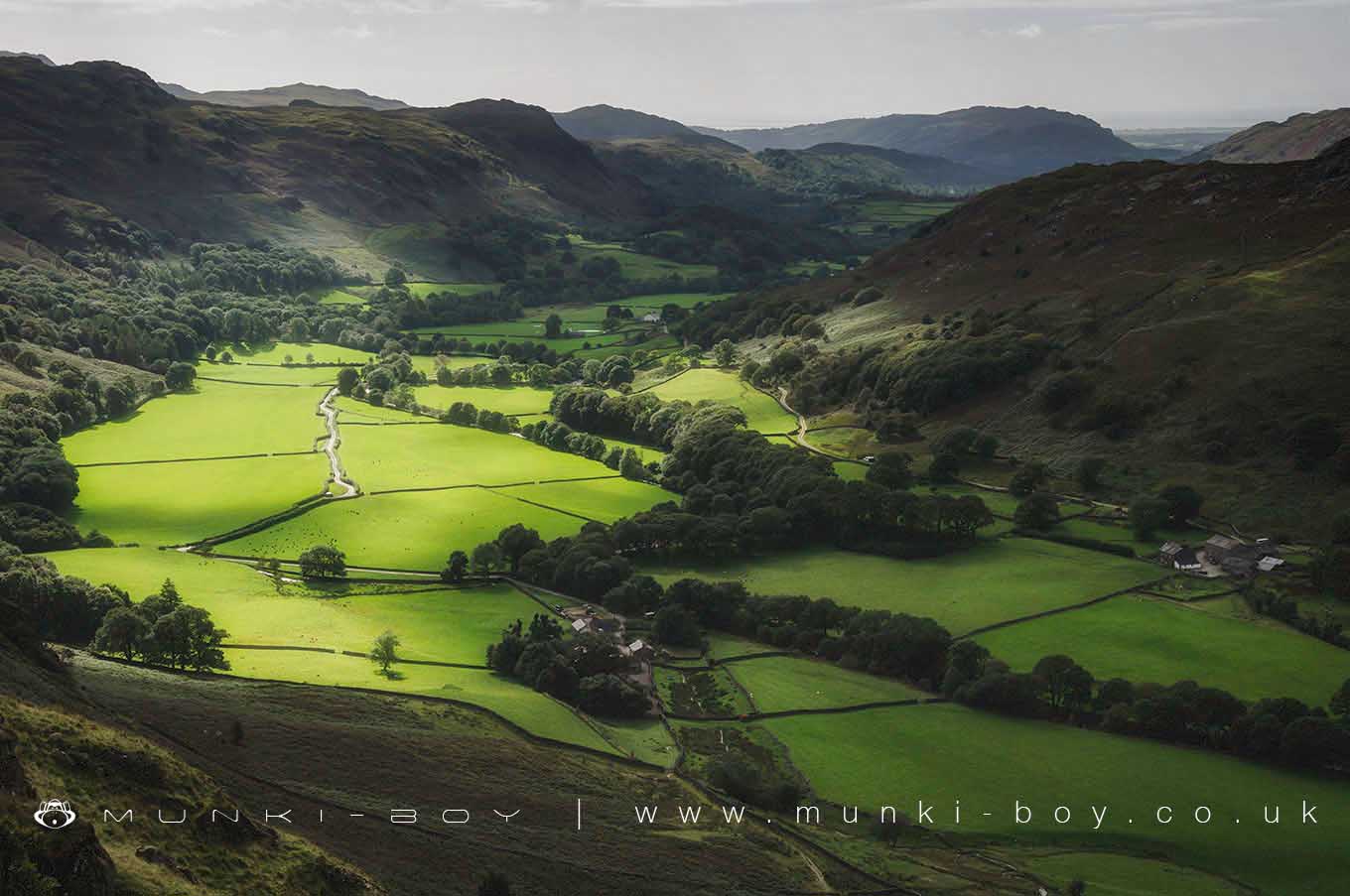
Eskdale is a valley of mountains, rivers and forests in the west of the Lake District in Cumbria. Eskdale starts in the wilds of the Scafell Massif which includes England’s highest mountain, Scafell Pike and runs south west to the wide open, tidal estuary at Ravenglass.
Eskdale’s human presence can be traced back to the Mesolithic Age when hunters settled by the sea. Prehistoric sites of Neolithic and Bronze Age stone circles and settlements remains, can be seen on Boot Bank and around Devoke Water. There are also many other burial sites to be seen in the Eskdale valley. A fort was built in Roman times, high up on the mountain at Hardknott Pass. Up to five hundred cavalry would have been stationed here. There was also a fort at Ravenglass and some of the Roman remains from here now form part of the UNESCO Frontiers of the Roman Empire World Heritage Site at Hadrian’s Wall.
A narrow-gauge railway stretching from Boot to Ravenglass was built in 1875, to take iron ore away to the coast at Ravenglass and then later on was used to transport granite from Eskdale’s quarries. Today the Ravenglass and Eskdale Railway, known as La’al Ratty, is a popular tourist attraction boasting the oldest working 15” gauge locomotive in the world.
Alfred Wainwright in his guide ‘Walks from Ratty’ describes Eskdale as ‘One of the loveliest of Lakeland’s valleys. Descending from the highest and wildest mountains in the district to the Sands of Ravenglass, in a swift transition from bleak and craggy ridges to verdant woodlands and pastures, watered by a charming river’.
Local History
Historic monuments near Eskdale